
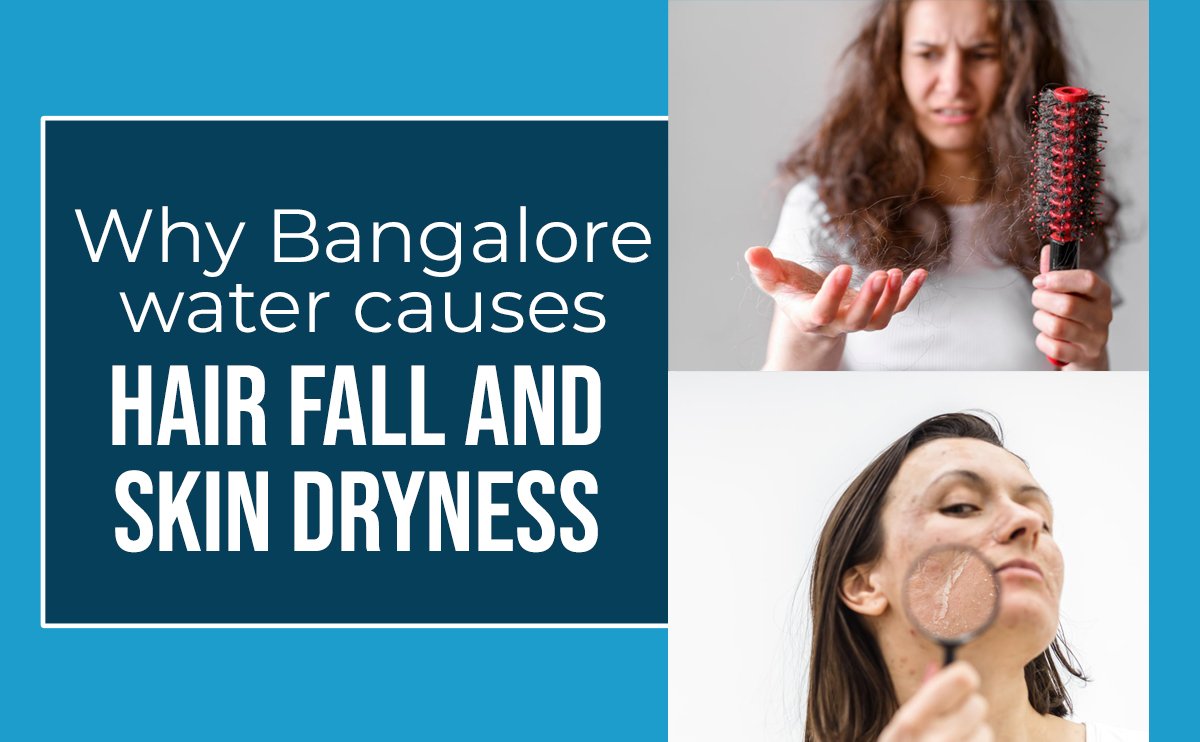
Why Bangalore Water Causes Hair Fall and Skin Dryness

Key Takeaways
- Bangalore water hair fall is commonly linked to hard water containing high levels of calcium and magnesium.
- Hard water can leave mineral residue on hair and skin after bathing.
- This residue may lead to dry hair, increased breakage, and tight or flaky skin over time.
- Changing shampoos or moisturisers alone may not help if water quality remains the same.
- Identifying and treating hard water used for bathing can reduce these everyday issues.
- These effects are related to water quality, not medical conditions.
Introduction
Many people living in Bangalore notice similar daily problems—hair fall that does not improve despite using good products, and skin that feels dry or tight even after moisturizing. Over time, these issues become frustrating, especially when there seems to be no clear reason.
One of the most common concerns behind this is Bangalore water hair fall, where the quality of water used for bathing plays a bigger role than personal care routines. Bangalore’s water sources, especially groundwater and tanker water, differ significantly from surface water used in many other cities. This difference plays a major role in how water interacts with hair and skin on a daily basis.
This article explains why Bangalore water behaves differently, how it affects hair and skin, and what practical steps homeowners can take to reduce its impact.
Why Bangalore Water Quality Is Different
Bangalore depends heavily on groundwater and borewell water, especially in residential layouts, apartments, and newly developed areas. Unlike river water, groundwater passes through layers of rock and soil, absorbing minerals such as calcium and magnesium along the way.
In addition to borewell water, many homes rely on tanker water, which often comes from mixed or unmonitored sources. As a result, water quality can vary not just across the city, but even from one building to another.
According to Indian drinking water standards and global water quality guidelines, water with higher mineral content is classified as hard water. While this water is generally safe for daily use, it behaves very differently when used for bathing.
How Bangalore Water Hair Fall Happens
When hard water is used regularly for bathing, minerals in the water can stick to the hair and scalp. Over time, this creates a thin layer of residue that is difficult to wash away.
This can lead to:
- Shampoo not lathering or rinsing properly
- Hair becoming dry and rough to touch
- Scalp buildup that weakens hair roots
- Increased hair breakage during combing or washing
It’s important to note that this type of Bangalore water hair fall is usually due to breakage and scalp stress, not medical hair loss. The problem often improves once the water quality used for bathing is addressed.
How Hard Water Leads to Skin Dryness and Irritation
Hard water also affects the skin in a similar way. Minerals in the water react with soap and body cleansers, leaving behind residue that sits on the skin even after rinsing.
This can result in:
- Tight or stretched feeling after bathing
- Dry or flaky skin, especially on arms and legs
- Increased need for moisturisers
- Skin feeling dull or rough over time
Children and older adults often experience these effects more strongly because their skin barrier is more sensitive.
Why Hair and Skin Problems Continue Despite Using Good Products
Many people try switching shampoos, conditioners, soaps, or creams when they notice hair fall or skin dryness. While good products help, they work only on the surface.
If hard water continues to be used daily:
- Mineral buildup returns after every bath
- Product effectiveness reduces
- Results remain temporary
This is why people often feel that “nothing works” even after spending on better personal care products.
How Bangalore Homes Can Reduce Hard Water Impact
Reducing the effects of hard water starts with improving the quality of water used for bathing, not just drinking.
Common approaches include:
- Identifying whether household water is hard
- Treating bathing water to reduce mineral content
- Using solutions designed specifically for bathrooms
Many Bangalore homes choose hard water treatment options that work at the bathroom or household level, allowing residents to continue using their existing personal care products more effectively.
learn more: https://talwin.in/benefits-of-installing-a-water-softener-for-bathrooms/
Is Bangalore Water Safe for Daily Bathing?
Bangalore water is generally safe for daily bathing, but “safe” does not always mean skin-friendly or hair-friendly.
Water can meet safety standards and still:
- Leave residue on hair and skin
- Reduce soap effectiveness
- Cause dryness over long-term use
Understanding this difference helps set the right expectations and solutions.
Before We Answer Common Questions…
By now, it’s clear that many hair and skin issues faced by Bangalore residents are linked to water quality rather than personal care habits. These effects build up slowly, which is why they are often misunderstood or ignored.
Below are clear answers to the most common questions people search for online about Bangalore water, hard water, hair, and skin—explained in a simple, practical way.
Final thought
Hair fall and skin dryness are common experiences in Bangalore homes, but they are often misunderstood. In many cases, the root cause is hard water used daily for bathing, not a lack of good products or personal care.
By understanding the real cause behind Bangalore water hair fall, homeowners can make informed choices that improve everyday comfort and long-term results. Addressing water at its source often makes everything else work better.
FAQs
Hard water can contribute to hair breakage and scalp buildup, which may appear as hair fall. This is related to water quality, not medical conditions.
The most common reason is prolonged exposure to hard water used for bathing, which weakens hair over time.
Bangalore water is often hard, which can leave residue on the skin and lead to dryness or irritation with regular use.
Most areas in Bangalore receive hard water due to groundwater and borewell dependence.
Yes, it is safe, but long-term use can affect hair texture and skin moisture.
Moderate TDS levels are generally easier on hair. Very high mineral content increases residue buildup.
Poor soap lather, dry skin after bathing, rough hair texture, white stains on taps, and frequent scale buildup.
Simple home tests, TDS meters, or water testing kits can help identify hardness.
RO water is meant for drinking. It is not designed for bathing and may feel harsh on skin.
RO systems are for drinking water, while softeners are designed to treat bathing water. They serve different purposes.