High Sediment Levels in Water: Causes, Signs, Effects & Solutions
Key Takeaways
- High sediment levels in water mean solid particles are present in your supply.
- These particles may include sand, rust, or scale.
- Over time, sediment can reduce water pressure and clog fixtures.
- In addition, it can damage appliances.
- Proper filtration helps protect your plumbing system.
Introduction
High sediment levels in water are common in many homes. This is especially true in areas that depend on borewell or groundwater supply. At first, the problem may seem minor. For example, water may look cloudy or faucets may clog occasionally. However, over time, sediment can affect plumbing, appliances, and water clarity.
In many urban areas, groundwater supply changes throughout the year. As a result, sediment levels may increase during certain seasons. Understanding how rainwater harvesting and groundwater systems affect water quality helps explain why this happens.
If sediment is ignored, maintenance costs increase. Therefore, early identification is important.
What Are High Sediment Levels in Water?
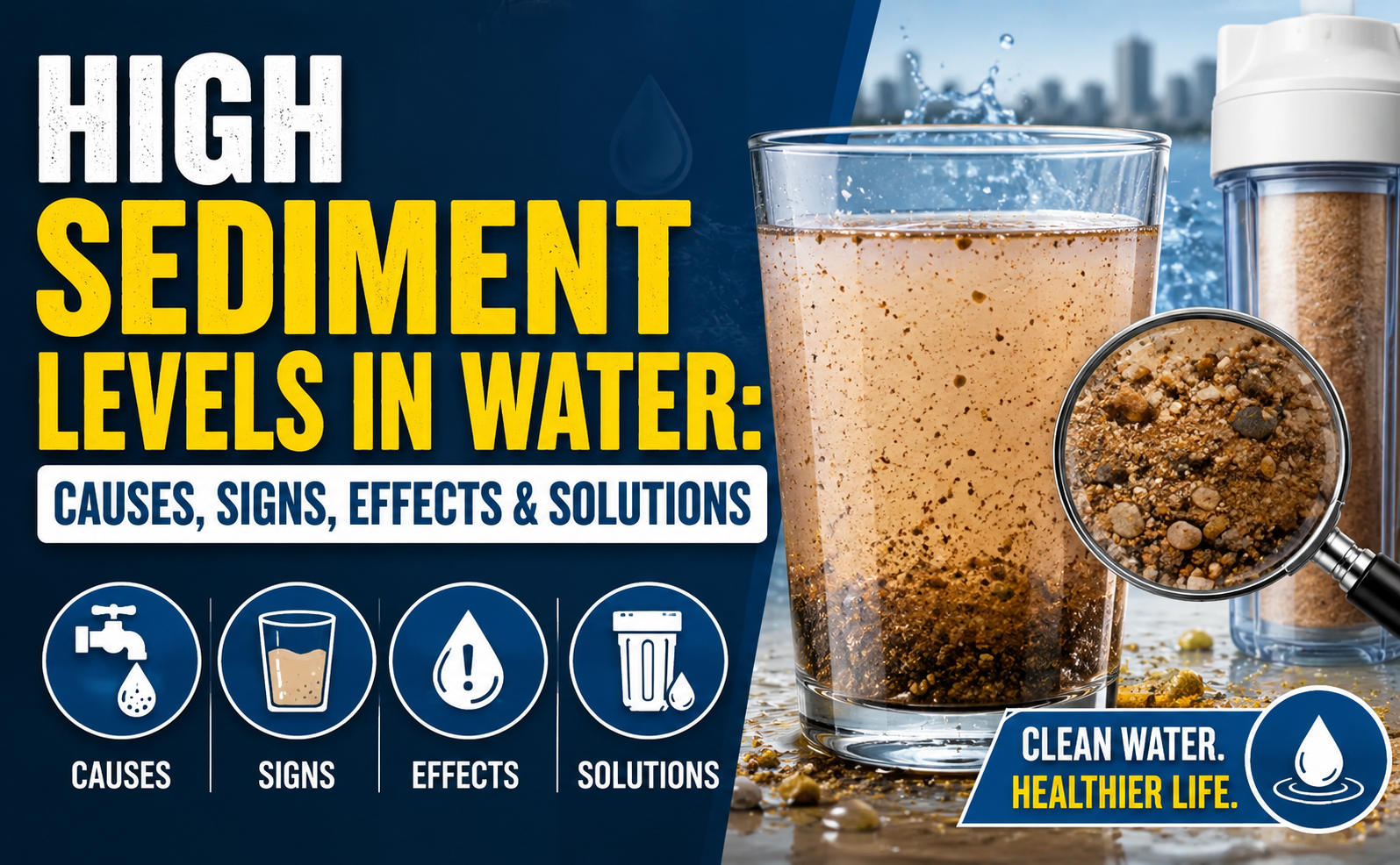
Sediment refers to visible solid particles in water. These particles are not dissolved. Instead, they float or settle.
Common examples include:
- Sand
- Silt
- Rust flakes
- Scale fragments
- Organic debris
If you fill a glass and let it sit, sediment usually settles at the bottom. In contrast, dissolved minerals remain invisible.
It is important to understand the difference between sediment and hard water. Hard water contains dissolved minerals. Sediment, however, consists of physical particles. Because of this, it requires mechanical filtration rather than chemical treatment.
Causes of High Sediment Levels in Water
Several factors contribute to sediment buildup.
Groundwater and Borewell Supply
Groundwater naturally carries soil and sand. Therefore, homes using borewell water often experience higher sediment variation. In addition, heavy rainfall or seasonal shifts can disturb underground layers. As a result, more particles enter the supply.
Municipal Line Disturbances
Pipeline repairs or pressure changes can loosen deposits inside supply lines. Consequently, sediment may suddenly appear in tap water. In many cases, this is temporary. However, older pipelines may continue to release particles.
Aging or Corroded Pipes
Old metal pipes corrode over time. Because of this, rust flakes break off and enter flowing water. These flakes often appear brown or reddish. They are sometimes confused with iron contamination. If staining is also visible, you may need to compare sediment with iron-related water problems before deciding on treatment.
Storage Tank Build-Up
Water storage tanks collect debris slowly. If tanks are not cleaned regularly, sediment re-enters the water supply. Over time, this becomes a recurring issue.
Signs of High Sediment Levels in Water
Sediment usually shows clear warning signs.
1. Cloudy or Murky Water
Water may look unclear when poured into a glass. If the cloudiness settles after a few minutes, sediment is likely present. In contrast, air bubbles disappear quickly.
2. Visible Brown or Black Particles
You may see particles floating or settling at the bottom of containers. These often come from soil, rust, or scale.
3. Gritty Feeling
Water may feel sandy when washing hands. As a result, it may not feel smooth or clean.
4. Reduced Water Pressure
Sediment builds up inside pipes over time. Therefore, the internal diameter narrows. Eventually, water pressure drops.
5. Frequent Faucet Blockage
Faucet aerators trap small particles. Because of this, clogs may happen repeatedly.
6. Appliance Performance Issues
Geysers and washing machines collect sediment internally. As a result, heating efficiency reduces. In addition, energy consumption may increase.
7. Residue Around Fixtures
Powdery or muddy residue may appear near taps. Over time, this becomes more noticeable.
Effects of High Sediment Levels in Water
Sediment mainly affects plumbing systems and maintenance.
- Plumbing Wear: Continuous particle movement increases internal pipe abrasion. Therefore, blockages become more likely.
- Appliance Efficiency Loss: Sediment accumulates inside heating elements. As a result, appliances must work harder.
- Reduced Cleaning Performance: Soap does not rinse as effectively when particles are present. Consequently, surfaces may not feel fully clean.
- Higher Maintenance Costs: Over time, frequent cleaning and repairs increase overall expenses.
Is Sediment in Water Harmful?
In most homes, sediment is not immediately dangerous. However, large amounts may carry additional contaminants depending on the source. Therefore, if water has unusual smell or heavy discoloration, testing is recommended.
In general, sediment affects plumbing more than health.
How to Test for High Sediment Levels in Water
You can perform simple checks at home.
- Fill a clear glass and let it sit for 30 minutes.
- Inspect faucet aerators for trapped debris.
- Check storage tanks for visible buildup.
If sediment appears regularly, professional testing can confirm the level.
Solutions for High Sediment Levels in Water
Sediment requires physical filtration. Basic drinking water purifiers may not solve whole-house issues.
Installing sediment filtration systems for home water at the entry point prevents particles from circulating through plumbing. As a result, pipes remain cleaner and appliances last longer.
It is also important to separate sediment from hard water issues. Sediment appears as visible particles. Hard water leaves white mineral deposits instead. If scaling is your main concern, it may relate to hard water problems in bathrooms rather than sediment contamination.
Correct diagnosis ensures the right solution.
Final thought
High sediment levels in water often begin as a small issue. However, over time, they can affect plumbing, appliances, and water clarity. Cloudy water, reduced pressure, and recurring blockages are clear warning signs.
By identifying the problem early and installing proper filtration, homeowners can protect their plumbing systems and maintain cleaner water flow.
FAQs
Small amounts are usually not dangerous. However, long-term buildup can damage plumbing systems.
Common causes include borewell supply, corroded pipes, and storage tank debris.
Yes. Sediment narrows pipe pathways over time. Therefore, pressure reduces gradually.
Occasional minor sediment may not cause immediate harm. However, consistent presence should be evaluated.
Installing a dedicated sediment filtration system is the most effective long-term solution.