Sediment Filter vs Carbon Filter: What’s the Difference?
Sediment Filter vs Carbon Filter: What's the Difference?
When comparing a sediment filter vs carbon filter, many homeowners are unsure which option is right for their water quality. Although both filters improve water quality, they serve different purposes. Understanding the difference between a sediment filter vs carbon filter helps you choose the right filtration system for your home, apartment, or commercial property.
Whether your water comes from a municipal supply or a borewell, contaminants such as sand, rust, chlorine, and unpleasant odors can affect its quality. While a sediment filter removes visible particles, a carbon filter targets dissolved impurities that impact taste and smell. Knowing how these filters work can help you build a more effective water treatment system.
What Is a Sediment Filter?
A sediment filter is the first stage of filtration in many water treatment systems. It removes suspended particles before the water flows into additional filtration units.
Common contaminants removed include:
- Sand
- Silt
- Dirt
- Mud
- Rust particles
- Scale
- Fine sediments
By removing these particles, a sediment filter protects downstream equipment such as carbon filters, water softeners, UV systems, and RO units from clogging.
If your home receives borewell water or municipal water with visible particles, installing a sediment filter is one of the simplest ways to improve water quality.
Related Solution: Learn more about Talwin's Sediment Filter in Bangalore.
How Does a Sediment Filter Work?
Sediment filters use a porous filter cartridge that physically traps suspended particles as water passes through it.
The filtration process is straightforward:
- Water enters the filter housing.
- Larger particles are trapped within the filter media.
- Clean water flows through to the next stage of filtration.
- Trapped sediments remain inside the cartridge until it is cleaned or replaced.
Sediment filters are available in different micron ratings. A lower micron rating captures finer particles, while a higher micron rating is suitable for larger debris.
Since sediment filters only remove physical contaminants, they are usually combined with other filtration systems for complete water treatment.
What Is a Carbon Filter?
A carbon filter is designed to improve water quality by removing dissolved contaminants that affect taste, smell, and appearance. Unlike sediment filters, carbon filters use activated carbon to adsorb impurities rather than physically trapping them.
A carbon filter commonly removes:
- Chlorine
- Bad taste
- Unpleasant odors
- Volatile Organic Compounds (VOCs)
- Certain pesticides
- Organic chemicals
Because carbon filters improve the overall quality of water, they are commonly used in residential, commercial, and industrial water treatment systems.
Related Solution: Explore Talwin's Carbon Filter in Bangalore.
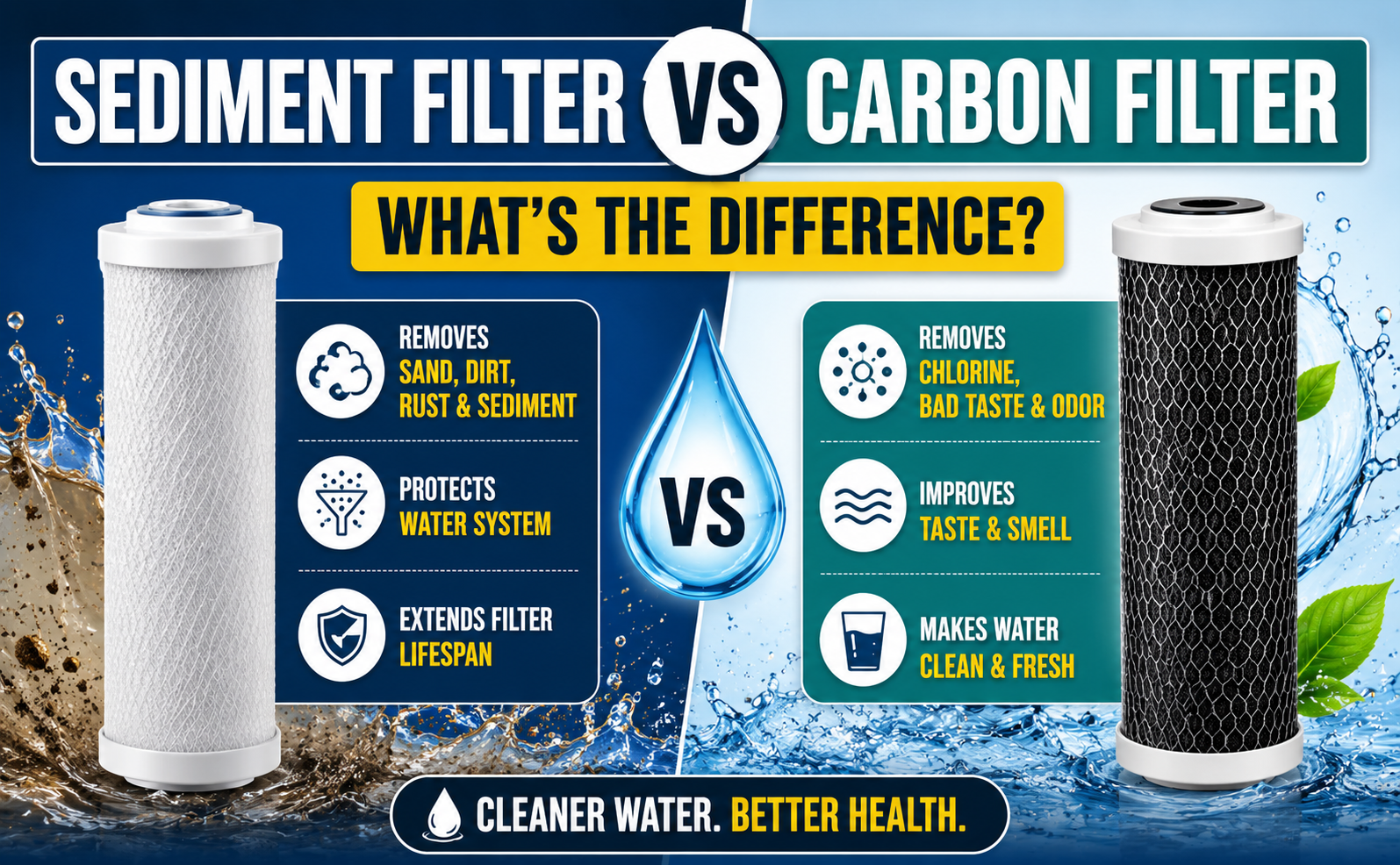
Removes Physical Particles
Sediment filters physically trap sand, rust, and silt.
Chemical Adsorption
Carbon filters use adsorption to remove chlorine and VOCs.
Protects Equipment
Sediment filters prevent downstream clogging in RO and softeners.
Improves Taste & Odor
Carbon filters are essential for removing bad smells and tastes.
How Does a Carbon Filter Work?
Activated carbon contains millions of microscopic pores, creating an extremely large surface area. As water passes through the carbon media, contaminants stick to the surface through a process called adsorption.
Unlike sediment filters, carbon filters do not remove sand, dirt, or rust. Instead, they remove dissolved impurities that cause unpleasant taste and odor.
This is why carbon filters are usually installed after sediment filters. The sediment filter removes larger particles first, allowing the carbon filter to focus on improving water quality.
Sediment Filter vs Carbon Filter: Key Differences
Although both filters improve water quality, they are designed for different purposes.
A sediment filter removes visible particles such as dirt, sand, rust, and suspended sediments. It protects plumbing, pumps, and other filtration equipment by preventing these contaminants from moving further through the system.
A carbon filter, on the other hand, improves the taste and smell of water by reducing chlorine, organic compounds, and certain chemicals. It does not remove large particles, making it unsuitable as a standalone pre-filter.
When comparing sediment filter vs carbon filter, the best choice depends on the type of contaminants present in your water. In many homes, both filters are installed together to provide complete water treatment.
When Should You Choose a Sediment Filter?
A sediment filter is recommended if your water contains:
- Visible dirt
- Sand
- Mud
- Rust particles
- Fine sediments
- Cloudy water
Homes using borewell water often experience these issues. Installing a sediment filter helps protect plumbing fixtures and improves the performance of other water treatment systems.
If you notice yellow or brown water caused by iron deposits, you may also need an iron removal system.
Related Article: 7 Clear Signs Your Tap Water Contains Excess Iron
When Should You Choose a Carbon Filter?
A carbon filter is ideal if your water has:
- Chlorine smell
- Unpleasant taste
- Chemical odor
- Organic contaminants
Municipal water supplies often contain chlorine used during disinfection. A carbon filter helps improve the taste and smell of drinking water by reducing these compounds.
If you're experiencing water quality issues that affect your skin or hair, it's worth understanding the cause before choosing a filtration system.
Related Article: Why Bangalore Water Causes Hair Fall and Skin Dryness
Sediment Filter vs Carbon Filter: Comparison Table
| Feature | Sediment Filter | Carbon Filter |
|---|---|---|
| Primary Function | Removes suspended particles | Removes chlorine, odors, VOCs |
| Removes Sand & Dirt | ✔ Yes | ✘ No |
| Removes Rust | ✔ Yes | ✘ No |
| Removes Chlorine | ✘ No | ✔ Yes |
| Improves Taste | ✘ No | ✔ Yes |
| Installation Stage | First stage | Second stage |
| Maintenance | Cartridge replacement | Carbon media replacement |
Can You Use Both Filters Together?
Yes. In fact, using both filters together is one of the most effective ways to improve water quality.
A sediment filter removes physical particles before they reach the carbon filter. This prevents clogging and extends the life of the carbon media. The carbon filter then removes chlorine, unpleasant odors, and dissolved organic contaminants, resulting in cleaner and better-tasting water.
A typical whole-house filtration system follows this sequence:
- Sediment Filter
- Carbon Filter
- Iron Filter (if required)
- Water Softener (if required)
- UV or RO Purifier (depending on water quality)
This multi-stage approach ensures each filter performs its specific role while improving the overall efficiency of the system.
Frequently Asked Questions
Neither filter is better because they solve different problems. A sediment filter removes suspended particles, while a carbon filter improves water quality by reducing chlorine, odors, and organic contaminants.
No. Carbon filters are not designed to remove physical particles such as sand, dirt, or rust. A sediment filter should always be installed before a carbon filter.
A sediment filter should always be installed first. It removes larger particles and protects the carbon filter from clogging.
If your water contains both suspended particles and chlorine or unpleasant odors, installing both filters provides the best overall water quality and protects your plumbing system.
Sediment filters generally require replacement every 3-6 months, while carbon filters usually last 6-12 months. Replacement intervals depend on water quality and daily usage.
Do You Need Additional Water Treatment?
Sometimes, sediment and carbon filters alone may not solve every water quality issue.
If your water contains excess iron, installing an Iron Filter helps remove iron deposits that cause yellow or brown stains on sinks, tiles, and sanitary fixtures.
If your home has hard water that causes scale buildup on taps, geysers, and appliances, a Water Softener can help reduce hardness and protect your plumbing system.
You can also learn how a water softener benefits bathrooms by reading our guide: Benefits of Installing a Water Softener for Bathrooms
Conclusion
Understanding the difference between a sediment filter vs carbon filter helps you choose the right filtration solution for your property. While a sediment filter removes sand, dirt, rust, and suspended particles, a carbon filter improves taste, odor, and reduces chlorine and certain organic contaminants.
Rather than choosing one over the other, many homeowners benefit from installing both filters as part of a complete water treatment system. This combination provides cleaner water, protects plumbing and appliances, and improves the performance of downstream filtration equipment.
If you're looking for the right filtration solution for your home or business, Talwin offers high-quality Sediment Filters, Carbon Filters, Iron Filters, and Water Softeners tailored to your water quality needs.
Explore our Sediment Filter in Bangalore and Carbon Filter in Bangalore solutions, or Contact Us to speak with our experts and find the right water treatment system for your property.