If your taps and tiles are covered in white chalky marks, your hair feels rough after a bath, and your geyser keeps failing, you are dealing with hard water. It is extremely common in Bangalore homes that rely on borewells and tankers — and across Chennai, Hyderabad, Coimbatore and much of the Deccan plateau.
What is hard water?
Hard water contains high levels of dissolved calcium and magnesium. As rainwater percolates through rock, it picks up these minerals. Under BIS IS 10500, the acceptable limit for total hardness is 200 mg/L (permissible up to 600 mg/L when no alternative source exists). Many Bangalore borewells test well above this.
Signs you have hard water
- White scale on taps, shower heads, tiles and glass doors
- Soap and shampoo don't lather well
- Dry, itchy skin and dull, rough hair
- Clothes look faded and feel stiff
- Geysers, washing machines and solar heaters fail early
- Kettles and vessels develop white crust
The hidden cost of hard water
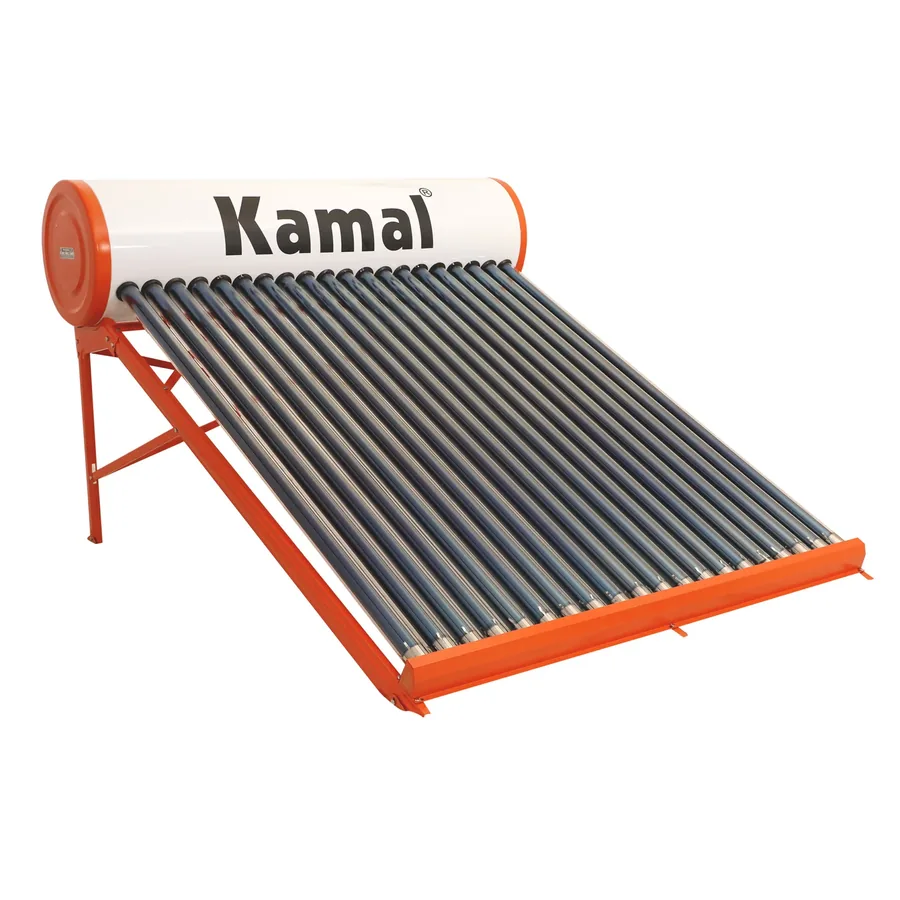
Just a few millimetres of scale on a geyser's heating element can significantly increase electricity consumption. Scale also chokes solar water heater tubes, clogs pipes and shortens appliance life — costing households thousands of rupees a year.
Get a free water hardness test and softener recommendation.
Get Free QuoteHow a water softener works
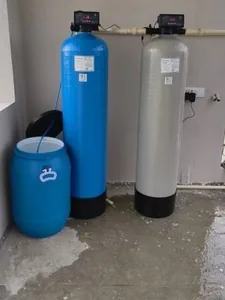
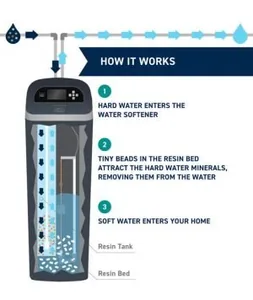
A softener passes water through resin beads that swap calcium and magnesium for sodium (ion exchange). When the resin is full, the system automatically regenerates with salt water. You just top up salt every 2–3 months.
Which softener do you need?
| Type | Treats | Best for |
|---|---|---|
| Bathroom softener | One bathroom / geyser | Renters, small flats |
| Apartment softener | Whole flat main inlet | 2–3 BHK apartments |
| Whole-house softener | Entire home | Villas, independent houses |
| Commercial softener | Building / process | Hotels, hostels, laundries |
Softener vs RO — what's the difference?
A softener removes hardness only; it does not reduce TDS or make water drinkable. RO removes almost all dissolved solids for drinking water. Most homes need a softener for bathing & appliances and an RO for drinking. Read our TDS guide.
Frequently Asked Questions
Does softened water cause hair fall?
No — soft water is gentler on hair and scalp. Hard water is more commonly associated with dry, brittle hair.
Is softened water safe to drink?
Softened water contains a small amount of added sodium. For drinking, use an RO purifier.
Need expert advice for your home or business? Free site visit across Bengaluru.
Get Free QuoteDisclaimer: prices, tariffs and subsidy figures are indicative and based on publicly available information at the time of writing; they can change. Contact us for current, site-specific figures.